
Why Automobile Window Film Is a Smart Investment
Protecting Your Upholstery and Skin from UV Rays
On a typical summer afternoon, cabin temperatures inside a parked car can exceed 80 degrees Celsius. Ultraviolet rays are the hidden culprit. They break down dashboard plastics, crack leather seats, and bleach fabric. A professional application at tints derby puts a barrier between those rays and your interior. Window film blocks up to 99% of UV radiation.
Your skin deserves the same protection! I’ve lost count of the drivers who ignore UV until the damage shows on their faces. Repeated exposure through side glass contributes to premature aging and uneven pigmentation, especially on the side that faces the window. A layer of quality film at tints derby filters UV-A and UV-B before they reach you.
Upholstery damage shows up in predictable ways:
- Leather seats lose their natural oils and crack
- Dashboard surfaces turn dull and chalky
- Cloth upholstery fades unevenly
Reducing Glare for Safer Driving
Glare is a factor in thousands of intersection collisions every year. When afternoon light bounces off a bonnet or a stretch of wet tar, the driver shrinks into a squint. Polarised sunglasses help, but they leave the passenger exposed and do nothing for the elderly relative in the back seat. Automobile window film at tints derby offers a more complete answer. The film’s optical layers diffuse incoming light and dampen the harsh contrast between bright sky and shaded dashboard. That reduction in visual noise translates into quicker reaction times. I have watched drivers blink away the strain after a single installation.
Consider the real-world payoffs:
- less eye fatigue during long highway stints
- clearer views of traffic lights and pedestrians in low sun
- steadier vision when emerging from tunnels or tree-lined roads
This simple layer on side and rear windows keeps attention on the road, not on the reflection staring back at you.
Boosting Fuel Economy Through Heat Rejection
According to the US Department of Energy, running the air conditioner can cut fuel economy by up to 25% in stop start traffic. That is a heavy price for a cool cabin. The remedy lies in keeping the heat out before it enters. Heat rejecting window film from tints derby blocks a significant portion of solar infrared radiation. The cabin stays closer to ambient temperature, so your compressor cycles less often.
Less compressor activity means less engine load. You burn less fuel on the same route. For daily commuters and long distance travellers, the savings accumulate quietly.
- Reduced cooling demand on the engine
- Quicker cabin cool down after parking in the sun
- Lower fuel consumption on highway and urban drives
I have seen drivers report noticeable changes in their consumption after a professional installation. It is a smart investment that pays back with every tank.
Key Factors to Consider Before Choosing a Tint Film
Understanding Visible Light Transmission (VLT) Ratings
The percentage of visible light passing through a film is a number with far reaching effects. Understanding Visible Light Transmission (VLT) ratings is essential for any informed decision. When selecting tints derby for your vehicle, the VLT rating is your primary reference point for legal compliance and visual comfort.
A 5% VLT film offers dramatic privacy, while a 70% VLT appears almost transparent. Key factors to consider before choosing a tint film include your local legal limits, colour stability, and nighttime visibility. For tints derby, these factors determine your overall satisfaction.
- Legal VLT thresholds vary by region and window.
- Higher VLT values preserve clarity after dusk.
- Quality films resist fading for years.
I have found that each percentage point matters. A low VLT may create a private space, but it can compromise your ability to perceive pedestrians on unlit roads. The wise choice balances aesthetics with safety.
Comparing Dyed, Metalized, and Ceramic Films
The material inside your window film defines its lifespan. Dyed films use a simple polyester layer, absorbing solar energy and fading within years. Metalized films add reflective particles, blocking infrared and strengthening the glass. Ceramic films employ nano-technology, rejecting heat without disrupting signals. For tints derby, this distinction is critical.
I have watched dyed films bubble in Durban’s sun. Metalized films resist that fading, but expect interference with your e-toll device. Ceramic remains the premium option, though the price stings!
- Dyed: economical but short lived
- Metalized: robust with signal compromises
- Ceramic: premium performance and clear visibility
Your vehicle’s electronics and parking habits will guide this decision. Choose a film that matches your daily reality.
Legal Regulations for Windshield Shading
South African law sets a strict threshold: your windscreen must allow at least 35% of light through. A film that looks superb in the showroom can earn you a hefty fine on the N1.
Your installer should provide a certificate of compliance matched to your exact vehicle. I have seen installers skip this step entirely. The position of each window matters, because rear glass allows darker shades. Medical exemptions demand formal documentation before installation. Without that paperwork, you risk having the film stripped at a police checkpoint.
A compliant installation usually depends on these specifics:
- The installer’s knowledge of the National Road Traffic Act
- Certification that matches film specifications to window positions
- Documentation for any medical exception to the 35% rule
For tints derby, the legal framework defines the parameters of every installation. Selecting a film without checking these details turns a simple upgrade into a liability.
Assessing Your Privacy and Aesthetic Preferences
Imagine the scene: you’ve spent a small fortune making your ride look like a stealth fighter, only to realize you now can’t see the traffic officer waving you over. That is the eternal struggle of tint selection. It is a battle between your inner secret agent and your need to actually see pedestrians. Your privacy and aesthetic choices are deeply personal, but they often fight each other for dominance.
A dark, reflective film screams “keep out,” which is excellent when you are parked at a dodgy taxi rank. Yet, the same film might make your car look like a fishbowl with a lid, especially if you chose a mirror finish that clashes with your paint. Before you commit, consider the car’s stature. A sleek BMW can pull off near black; a modest hatchback with limo tint just looks like a rolling cave.
Your preference for privacy also dictates practical features. You might want a film that shields your laptop bag from prying eyes, but you also need to see the robot clearly at a busy intersection. The decision matrix is simple.
– How much do you value your personal space versus your ability to make eye contact with other drivers?
– Is your parking situation a privacy nightmare, or do you live in a quiet suburb where nobody cares?
– Are you willing to schedule a follow-up visit to fix bubbling caused by frequent window usage?
These questions matter more than the shade itself. A film that is too dark for your night driving habits is a hazard, regardless of how cool it looks. Similarly, a film that is too light might as well be clear glass, offering zero sanctuary from the paparazzi that never actually follow you.
Aesthetic preferences often hinge on the factory look. Some people want the OEM privacy glass vibe, which is a deep, integrated black that comes straight from the factory. Others prefer a subtle tint that merely takes the edge off the harsh sun. For tints derby, the local vibe often leans towards the dramatic, but you must ask yourself if you want a car that looks like a vampire’s coffin or one that simply reflects your taste without screaming for attention.
The best choice balances your need for seclusion with the reality of your driving environment. If you live in a high-traffic area where people constantly peer into your car at red lights, you will value the security of a darker film. If you are a nervous driver who relies on visual confirmation, you will regret sacrificing visibility for style. Ultimately, the decision is a measure of your comfort zone, not just the film’s opacity. Choose wisely, or prepare to wave at every intersection, hoping you aren’t giving the finger to a friend by accident. That is the true test of tints derby.
Budgeting for Quality and Installation
Budgeting for tints derby demands more than a glance at the price tag. The lowest quote often hides inferior adhesive or inexperience, leading to peeling within months. I have seen cars where a bargain install left bubbles across the rear window. Quality film and skilled fitting cost more upfront, but they protect your resale value and sanity.
Consider the following when comparing estimates:
- The film’s warranty, which should cover fading and delamination.
- Whether the installer is certified and insured.
- The cleanliness of their workspace, since dust ruins adhesion.
- Their policy on follow-up repairs.
A reputable shop will happily explain these details. They will also adjust their price based on your vehicle’s window count and curves. Paying a bit more for a professional who understands tints derby conditions is an investment, not an expense. Choose durability over discount pricing.
What to Expect During the Professional Application Process
Steps for Preparing Your Vehicle
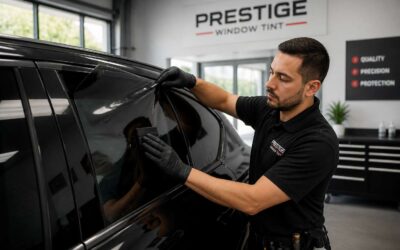
Walking into the bay for your tints derby installation, you will find the technician inspecting every window under a bright work light. Chips, scratches, and old adhesive residue are noted before any film touches the glass. The surface is then cleaned with a pH-neutral solution and a stainless steel razor blade, removing contaminants that could trap air bubbles.
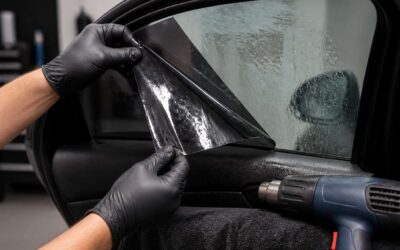
The film is cut with a computerised plotter to match your vehicle’s exact contours. During placement, a slip solution lets the installer slide the tint into position, then a squeegee forces out moisture. Your car remains parked with windows sealed for the curing period, allowing the adhesive to set. This is the careful process behind every professional tints derby job.
How the Film Is Cut and Contoured
A professional tints derby installation starts with a computer, not a knife. The plotter reads your vehicle’s glass dimensions and cuts the film from a roll, accounting for the curve of the screen and the angle of the quarter lights. Each panel is then lifted with a hinge technique that keeps the adhesive clean.
The technician applies a slip solution to the glass, slides the film into position, and forces out the moisture with a squeegee. They check for specks of dust under a work lamp before the final pass. The film is trimmed only once it rests in place, with a blade that never touches the glass.
- The cutting depth is set for the film’s thickness, not the glass.
- Heat guns soften the film for compound curves, such as the rear window of a bakkie.
That is how a tints derby job achieves a seamless fit. The process leaves no room for guesswork, only degrees of precision.
Techniques for a Bubble-Free Finish
Watching a tints derby technician work is a bit like observing a surgeon who refuses to rush. The slip solution goes on first, not as a careless splash, but as a measured glide that lets the film float into place. Pressure comes next, applied in overlapping passes that push fluid toward the edges. The goal is not speed. The goal is total contact.
A bubble is simply trapped air that refused to leave. The technician coaxes it out with a soft squeegee, working from the centre toward the glass edge. Heat guns soften stubborn areas, but the real trick is patience. Rushing a curve invites creases. Creases invite failure.
Here is what happens during a proper install:
– A tacky spray preps the glass surface.
– The film is set with a slip solution.
– A squeegee removes moisture in a crosshatch pattern.
– A work lamp reveals hidden particles.
– A final pass seals the edges.
Every step in a tints derby application exists to eliminate variables. The film goes on wet, settles flat, and dries without a single raised pocket.
The Drying and Curing Timeline
A professional tints derby application follows a sequence of precise steps. The technician inspects every pane under direct light before a single sheet is laid. This scrutiny prevents imperfections from being sealed into place. Expect the vehicle interior to be prepped with protective covers, and the glass cleaned with a solution that leaves zero residue. The film is then positioned with a slip solution, using a controlled layering that allows for precise alignment.
The drying and curing timeline varies with climate. In South Africa’s humidity, a typical install reaches full adhesion within seven days. During the first 48 hours, moisture beads remain visible beneath the film; they vanish gradually.
- The first hour requires the windows to remain untouched.
- After 24 hours, rolling them down is still unsafe.
- Once cured, the film bonds at a molecular level.
Tints derby professionals will always outline this schedule before you leave their workshop.
Finding a Trusted Installation Expert in Your Area
Checking Certifications and Industry Affiliations
Finding an expert for tints derby requires more than picking a shop. I have seen flawless installations fail because the installer lacked proper training. In South Africa, the gap between a neat job and a nightmare often comes down to verification.
Check for certifications from recognised bodies such as the International Window Film Association. Affiliations signal ongoing education and adherence to industry standards. Proof of insurance and written warranties are standard for a reputable professional.
- Verify membership in professional associations
- Request documentation of certified training
- Confirm the installer follows manufacturer guidelines
An installer with these credentials offers peace of mind. Their work on tints derby reflects a commitment to quality.
Evaluating Portfolio and Customer Testimonials
Evaluating a portfolio tells you more than any promise. When I assess a tints derby installer, I look for consistent edges and dust-free application across different vehicles. The strongest portfolios show work on curved glass and flat windscreens alike. Customer testimonials matter equally. Read them for specific details about timeframes and cleanliness. Generic praise like ‘great job’ carries little weight.
A reliable expert will happily share references. They understand that verification protects their reputation. Look for these markers in their track record:
- Clear photos of the film’s seamless finish on windscreens and side windows
- Testimonials that mention post-installation support or warranty claims
These clues separate a seasoned professional from a hobbyist.
Understanding Warranties and Service Guarantees
Finding a trusted installation expert in your area means inspecting their facility for proper lighting and ventilation. I always ask how they manage complex curves on rear screens. The warranty document should be requested before any film is cut.
Understanding warranties and service guarantees for tints derby requires reading the exclusions. Most policies omit accidental damage and improper cleaning. A reliable installer explains the manufacturer’s role and offers a transferable guarantee if you sell the vehicle.
Getting Transparent Cost Estimates
Most vehicle owners assume a lower quote means a better deal, yet the cheapest tint often conceals the true expense of rework. In my experience, getting transparent cost estimates for tints derby begins with a detailed inspection of your car’s glass area, not a flat rate quoted over the phone. A trustworthy expert will measure every window, note the curvature of the rear screen, and then explain why certain films cost more per square metre.
When I evaluate an installer, I look for three signals.
- They offer a written quote that separates film cost from labour and workshop fees.
- They ask about your driving habits and parking environment before recommending a product.
- They show you samples under different lighting rather than relying on a brochure.
These signals matter more than a glossy portfolio, because they reveal how the professional thinks about long term satisfaction.
Learning About Post-Installation Support
Finding a trusted installation expert in your area starts with a conversation, not a price quote. A professional who offers tints derby will ask about your vehicle, your daily commute, and where you park. They will inspect the glass before making recommendations. This initial interaction reveals their depth of knowledge. When I search for an installer, I pay attention to three details:
- How they answer questions about film brands
- Whether they explain the curing process
- Their response time to follow-up messages
Post-installation support matters just as much. The best specialists provide clear curing instructions and a written warranty. They respond when you notice a bubble or a loose edge, and they stand behind their film choices. That commitment separates a one-time transaction from a lasting relationship.
Avoiding Unrealistic Quotes and Subpar Materials
A shockingly low quote for tints derby should make you pause, not celebrate. Quality film carries a real price, and any installer quoting far below the market average is likely sacrificing quality somewhere. In my experience, the cheapest price arrives with hidden conditions.
Cheap materials often come from dubious sources. They fade quickly, fail to block heat, or bubble within weeks. Some operators stretch automotive film across house windows or work without proper dust control.
A direct question about the exact film roll reveals a lot. Seeing the manufacturer’s packaging settles it. A true specialist welcomes that scrutiny.
These signs separate fair pricing from trouble:
- Pressure to pay cash before installation
- Vague answers about where the film comes from
- Reluctance to show the actual film roll
Your instinct matters! The lowest quote for tints derby often leads to the most expensive correction.
Essential Maintenance and Longevity Advice for Tinted Windows
Recommended Cleaning Supplies and Methods
Most film failures begin with a dirty microfiber cloth. That simple oversight causes more damage than sun exposure ever will. For tints derby drivers, longevity starts with understanding what touches the glass.
Use a mild ammonia-free soap mixed with distilled water. Ammonia breaks down the adhesive layer. Squeegees with soft rubber edges work well, but avoid anything abrasive. The coastal humidity around tints derby means you should dry the glass quickly to prevent mineral deposits!
Here is the short list for safe cleaning:
– A pH-neutral, ammonia-free cleaner
– Microfiber cloths with no fabric softener residue
– Distilled water to prevent spotting
– A soft silicone squeegee for large panels
Wipe in straight strokes, not circles. Circles trap grit against the film. After cleaning, leave the windows down an inch so the edges dry before you roll them up.
The film should last beyond a decade if you follow this routine. Poor cleaning habits cut that lifespan in half.
Addressing Minor Scratches and Air Pockets
Scratches on window film rarely mean replacement. Fine marks on the top coat can be polished with a cerium oxide compound, but only if the scratch does not reach the adhesive layer. For tints derby drivers, assess depth before touching anything. Shallow scratches often vanish with careful polishing. Deep ones require a professional, since buffing through the film exposes it to moisture.
Air pockets demand a different touch. Small bubbles flatten with a soft plastic squeegee after the curing period ends. Warmth helps the adhesive flow; the difference is immediate!
- Use a hairdryer on low heat for thirty seconds
- Press from the center outward with the squeegee
- Puncture larger bubbles with a fresh razor blade and flatten
Never use a pin for tints derby windows. I have watched drivers try it, and the tear spreads. A blade creates a slit that closes cleanly. Trapped moisture evaporates through the slit over several weeks.
Signs That Your Film Needs Replacement
The curing period is just the beginning. How you treat the film afterwards determines whether it lasts five years or fifteen. For tints derby drivers, the first rule is regular inspection. A quick check of the edges every few weeks catches problems early. Run your fingers along the window borders and feel for lifting! Address it before dirt gets underneath.
Signs that your film needs replacement are visible early:
- Bubbles that reappear after flattening mean the adhesive has lost its grip.
- A purple or hazy appearance indicates the dye or metal layer is degrading.
- Creases or tears near the defroster lines cannot be polished out.
I have seen tints derby vehicles with film that lasted a decade, but those owners never ignored the warning signs. When edges silver or it clouds, replacement is cheaper than repairing glass damaged by trapped moisture.
Cost-Saving Measures Without Compromising Quality
Routine maintenance for tints derby vehicles does not require expensive products. A soft silicone squeegee and a microfiber cloth handle most daily grime. Park with the windows slightly cracked during hot afternoons to reduce pressure on the adhesive. This simple habit prevents stress fractures that lead to peeling.
For cost savings without compromising quality, focus on prevention. Use a sunshade on the dashboard to lower interior temperatures. Extreme heat accelerates dye breakdown. One client in Durban saved thousands by covering his windscreen every day. His film lasted nine years. Regular checks of the door seals also stop moisture from reaching the film edges.
- Reapply a protective coating to the film surface every six months.
- Keep window channels clean and free of grit.
- Address any rattling window regulators immediately.
Small investments in care return years of service from your tints derby installation.
0 Comments