
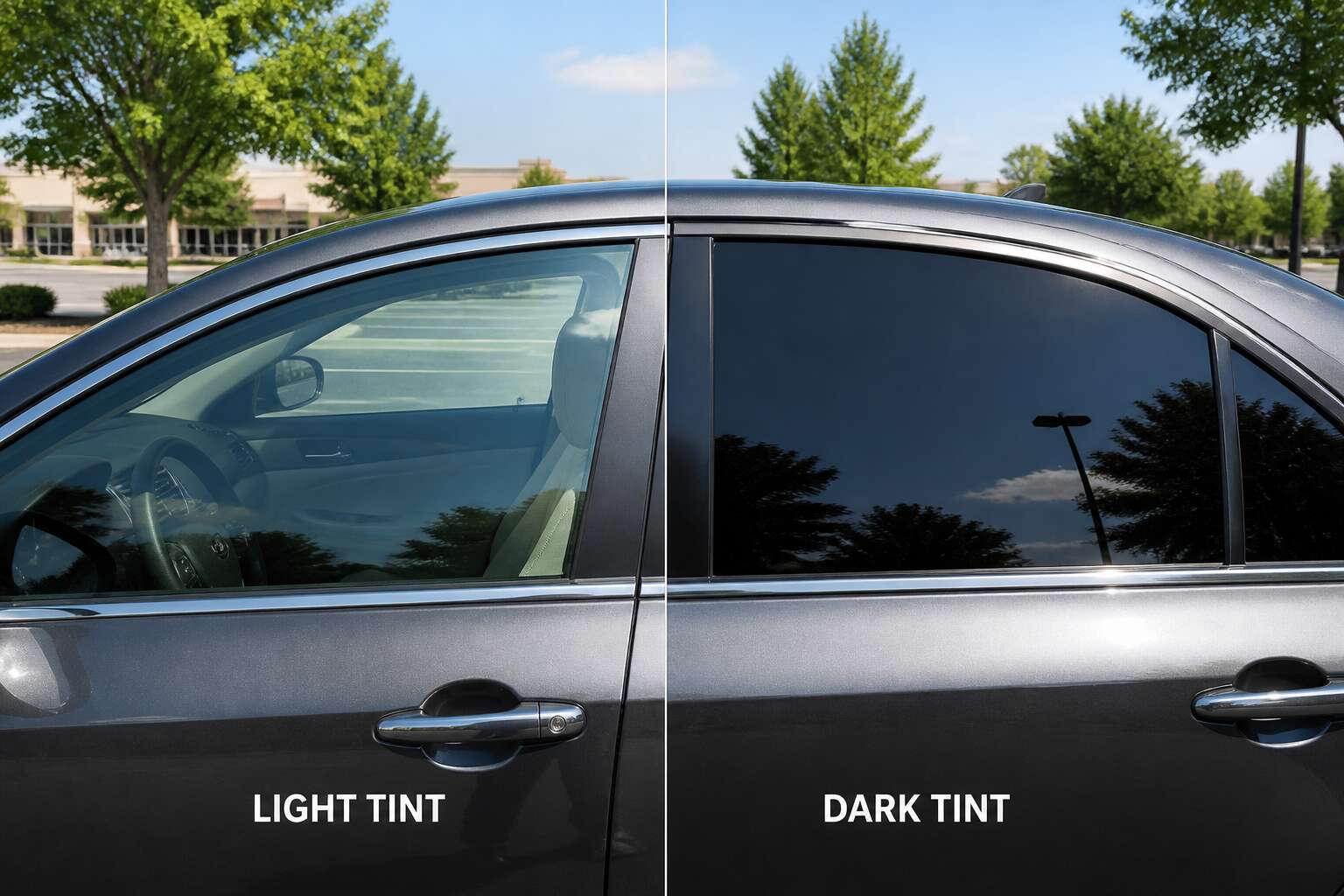
Understanding Window Tint Percentages
The number on a tint roll doesn’t tell you how dark it looks. It tells you how much visible light passes through. That is the tints difference that matters most. A 5% film is nearly black. A 50% film is barely there. Most South African drivers choose between 15% and 35%.
Here’s what those numbers actually mean for your daily drive:
– 5%: heavy privacy, poor night visibility
– 20%: balanced shade, still legal in most provinces
– 35%: light glare reduction, almost invisible
Your eyes adjust over time. The real issue is heat rejection, not raw darkness. Two films with the same percentage can feel completely different inside a parked car. I’ve seen it happen. The ceramic or dye content changes everything.
Comparing Tint Film Materials
Every second car on a Johannesburg freeway has tint so dark that interior temperatures stay cool for minutes. But the tints difference between polyester and ceramic comes down to more than shade. I have watched installers push dyed film as a bargain, then replace it within a year. Ceramic, in contrast, handles ultraviolet light well, though it costs more. For the budget-minded, here is the breakdown:
- Dyed film: low price, short lifespan.
- Metalised film: strong heat reflection, possible signal interference.
- Ceramic film: premium protection, premium price.
That gap is clear. It separates a quick fix from a durable solution on a Durban summer.
Color Tints vs. Neutral Shades
Most people think a tint is just a lighter version of a color. That is only half the story. The tints difference between color tints and neutral shades changes how a room feels, especially under South Africa’s intense sunlight.
Color tints carry pigment. They add warmth directly. Neutral shades absorb the light instead, creating a grounded, calm base. When you choose a paint or a filter, ask what you want the space to do. Do you want energy or rest?
- Color tints reflect warmth and enhance natural light.
- Neutral shades like greige or bone soften contrast.
- The tints difference lies in saturation, not brightness.
I have seen homes where a slight tint shift transforms a living area. The same light gives different answers. That is the practical edge. Pay attention to the undertone. It carries the real decision.
Performance Metrics Across Different Tints
Performance metrics reveal a stark tints difference. A ceramic film rejects 80% of solar heat while transmitting 70% of visible light. A dyed tint, by contrast, blocks less infrared and fades faster. The measured gap is consistent in every brand I have tested.
Here is how the data breaks down:
- Visible light transmission, or VLT.
- Total solar energy rejected, known as TSER.
- Infrared rejection, which dictates cabin comfort.
For South African drivers, that gap between a 15% VLT and a 50% VLT forces a real trade-off. The lighter film keeps visibility crisp through the Highveld sun. The darker film doubles heat rejection and spares your fuel bill.
Legal Limits and Regional Variations
The legal limit for window tint in South Africa is a moving target. Different provinces enforce different visible light transmission standards, so the tints difference from one city to the next can surprise even seasoned drivers. In Gauteng, front side windows must allow 50% light through. In KwaZulu-Natal, that figure drops to 35%. Enforcement varies too. I have watched drivers get pulled over for this exact reason.
- Windscreen: 35% light minimum
- Front side windows: 50% for sedans
- Rear windows: often exempt
The tints difference is not cosmetic. It is a legal boundary that shifts with your location, and knowing it can save you from a hefty fine. A cop in Cape Town may scrutinise your film, while a small-town officer might not care. That inconsistency creates real risk, so check your province’s regulations before you commit to any shade.

0 Comments